A Shared Component Library for Privacy-First Mobile Apps
An Ionic/Angular demo app and open-source GitHub repo showcasing reusable components and layouts for mission-driven mobile projects.

Background
Throughout 2026, we've been building a small ecosystem of "privacy-first" mobile apps for recovery, mental health, and mission-driven work. As those projects grew, we kept rebuilding the same patterns in Ionic like onboarding flows, journaling layouts, checklists, progress displays, and card-based UIs tuned for beginners and non-technical users.
To stop reinventing the wheel, we pulled those patterns into a dedicated project. UpStart Components is an Ionic/Angular demo app and open-source GitHub repo that showcase reusable components and layouts for future UpStart mobile projects and for anyone else who finds them helpful. Built with Angular 20 standalone components, Ionic 8, and Capacitor 7, it serves as both a personal reference and a community resource.
Code & Documentation
github.com/UpStart-Productions/UpStart.MobileComponentsThe Challenge
Every new app started to suffer from the same problems:
- Inconsistent UX: Small differences in spacing, buttons, and flows made each app feel like a one-off instead of part of a coherent suite.
- Slow starts: Spinning up a new project meant copying old code, stripping out app-specific bits, and fixing whatever broke.
- Harder to maintain: When we improved a pattern (say, a streak tracker or a journaling flow), those improvements didn't automatically reach other apps.
For a small studio focused on helping nonprofits and recovery projects, this kind of duplication meant wasted time and less energy for the actual human problems we're trying to solve.
Our Approach
We decided to treat our recurring patterns as a product in their own right:
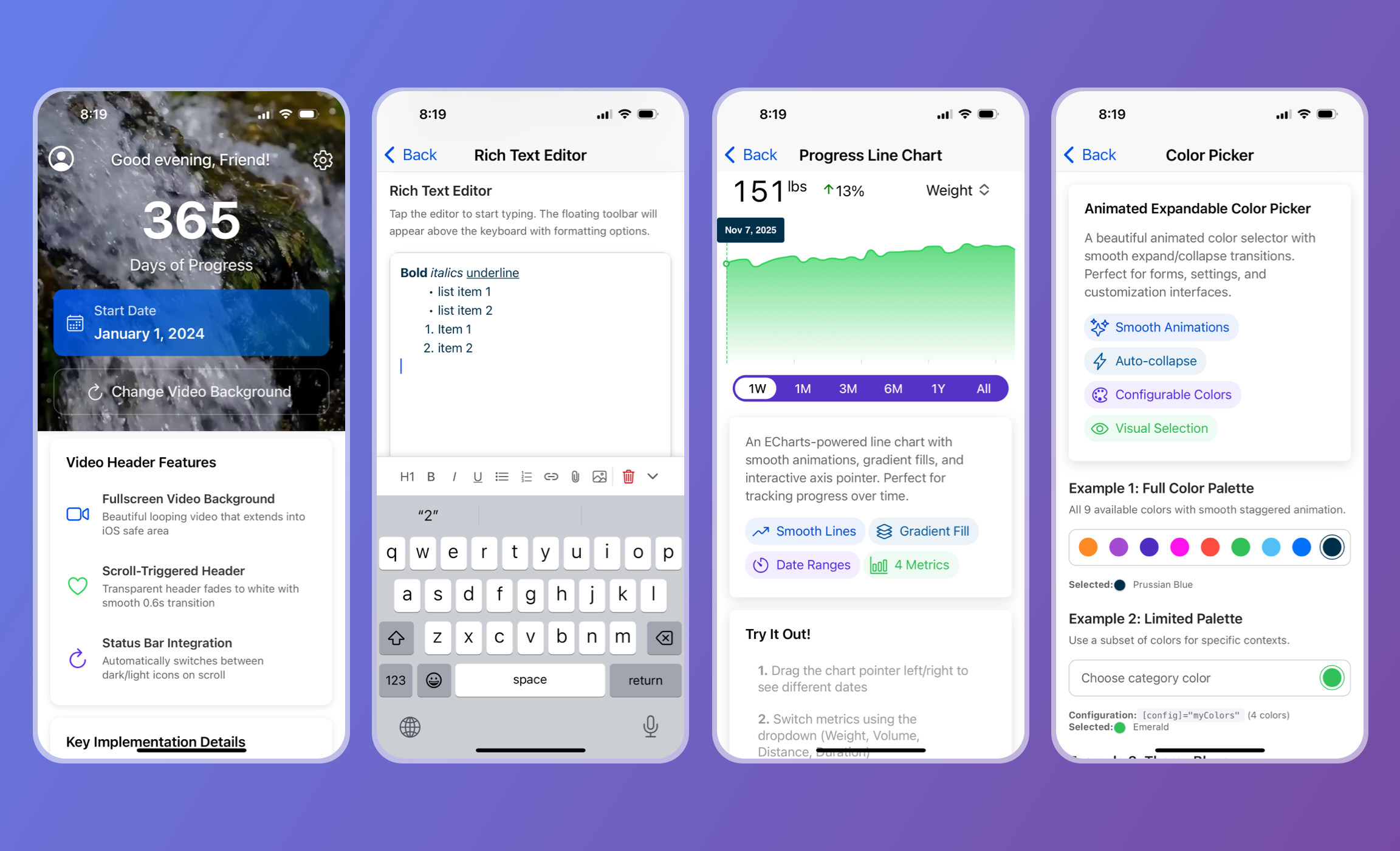
- Build a dedicated demo app – An Ionic mobile app that showcases components in a real, touchable context, not just screenshots.
- Open-source the library – A public GitHub repo (MIT-licensed) so we can reuse the code across UpStart apps and invite others to adapt it.
- Design for mission-driven use cases – Prioritize components that matter most for nonprofits and recovery tools: simple forms, checklists, progress indicators, and reflection-friendly layouts.
- Keep it privacy-first – Favor patterns that work well with local or minimal backends so it's easier to build apps that respect user privacy from day one.
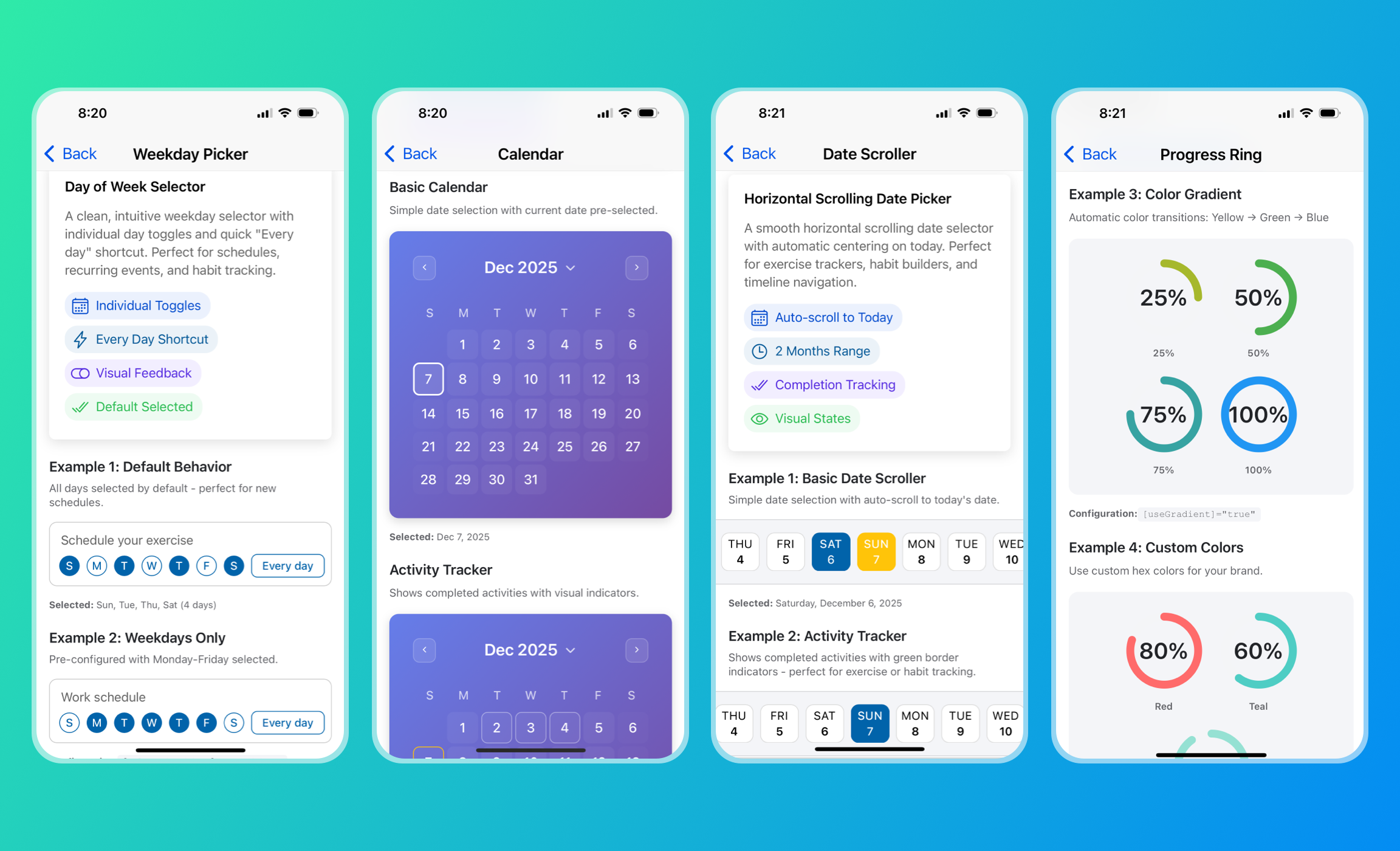
To keep things approachable, we started with a focused set of real-world components, grouped into a few high-value areas:
Widgets & UI basics
- • Feelings (mood) widget
- • Step card
- • Progress ring
- • Avatar picker
- • Number flipper
- • Button bar
- • Tabs FAB (floating action button)
Dates & forms
- • Calendar component
- • Date scroller
- • Color picker
- • Weekday picker
Data & content
- • Progress line chart (ECharts)
- • Rich text editor (Quill + mobile toolbar)
"Hard stuff" helpers
- • Gamification system (coins, confetti, haptics)
- • PDF export service (HTML → PDF + share)
- • Video header pattern (scroll-aware, status bar aware)
- • SQLite starter kit (schema, CRUD, demo ToDo)
The Result
UpStart Components is now:
- Live as a mobile app that demonstrates how each component feels on a real device.
- Published as a GitHub repo that anyone can clone, explore, and adapt for their own Ionic projects.
We don't have many external adopters yet and that's okay. The primary "client" so far is our own app ecosystem: as we build tools like Nepho and Kairo, we now reach for shared, battle-tested components instead of starting from a blank screen.
Internally, this has already begun to:
- Shorten the time from idea to working prototype
- Improve visual and interaction consistency across apps
- Make it easier to try new product ideas without a huge upfront build
Why It Matters
For small nonprofits and recovery-focused projects, tech is a means, not the mission. If every app takes months just to get the basics right, a lot of good ideas never make it into the hands of the people who need them.
UpStart Components helps change that for us, and our clients by:
- Reducing friction: more time spent on the unique parts of a project, less on recreating standard screens.
- Raising the floor: even simple MVPs can have a clean, thoughtful UX that feels trustworthy and approachable.
- Supporting privacy-first design: components are built with low-overhead, local-friendly patterns in mind, making it easier to respect user data from the start.
It's early days. But by investing in this shared foundation now, we're making it easier to build and keep improving a suite of mobile tools that serve real people doing hard, important work.
Explore the Components
View on GitHub →